
🚀 Laravel 13: What's New and Why Developers Should Upgrade
Laravel continues to evolve with each major release, and Laravel 13 brings several exciting improvements for modern web developers. From AI-powered applications to smarter search, better APIs, improved queue management, and enhanced developer experience, Laravel 13 gives developers more tools to build powerful applications. ✨
Whether you're starting a new project or maintaining an existing Laravel application, understanding what's new can help you decide whether it's time to upgrade.
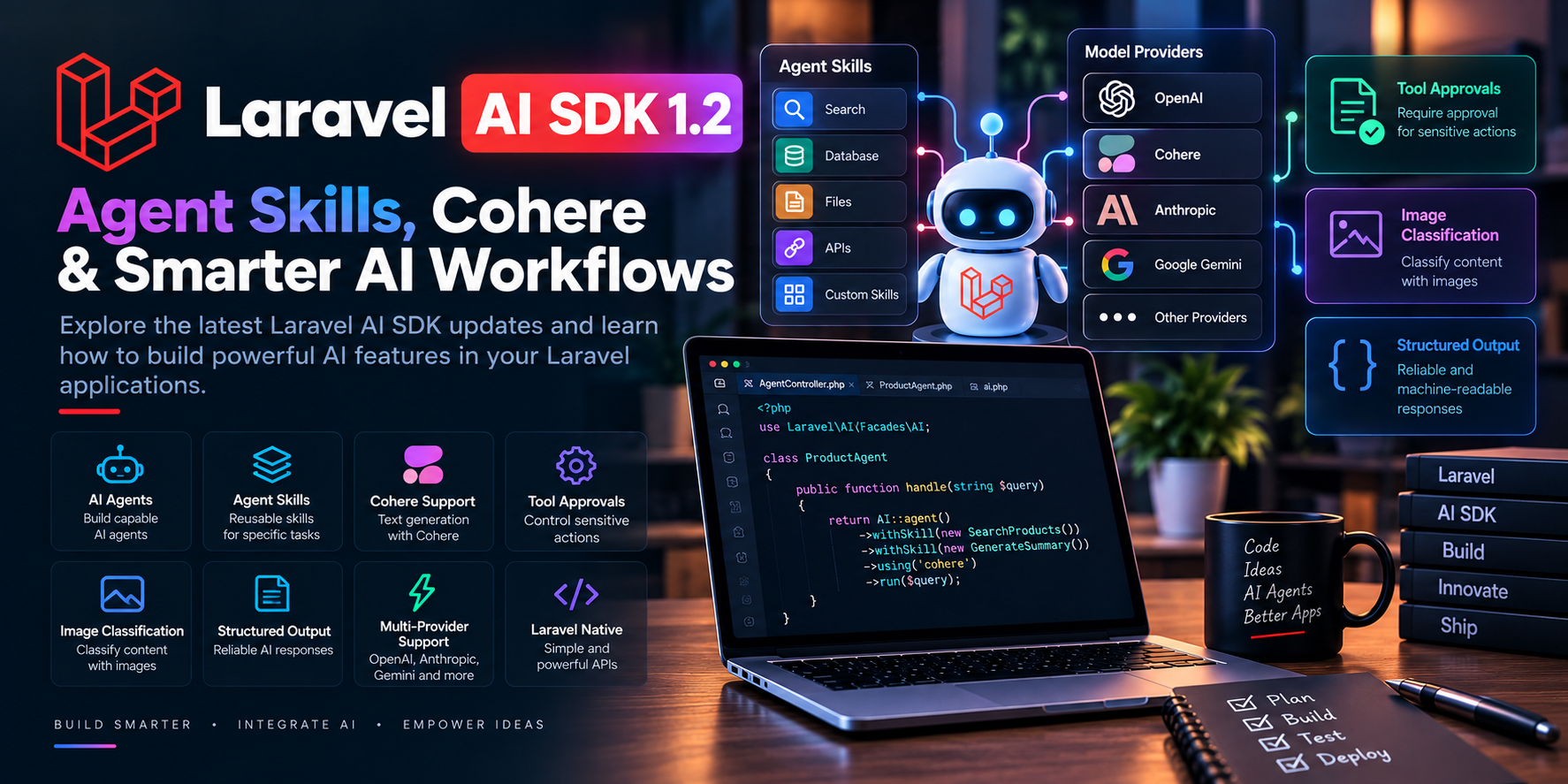
🤖 Laravel AI SDK
One of the most exciting additions is the Laravel AI SDK.
It provides a Laravel-friendly way to integrate AI capabilities into applications, including:
- 🤖 AI agents
- ✨ Text generation
- 🧠 Embeddings
- 🔧 Tool calling
- 🖼️ Image generation
- 🎵 Audio capabilities
- 🔎 Vector stores
This makes it easier to build AI-powered features without creating completely different integration layers for every AI provider.
Imagine adding features such as:
- 💬 AI customer support
- 📄 Document analysis
- 🛒 Intelligent product recommendations
- ✍️ Automated content generation
- 🧠 Internal AI assistants
- 🔎 AI-powered search
Laravel is making AI integration feel much more natural for PHP developers.
🔎 Semantic Search and Vector Search
Traditional search normally looks for matching keywords.
Semantic search takes things further by understanding the meaning behind a query.
For example, a traditional search might look for:
Laravel hosting
A semantic search system can understand a question such as:
Where can I deploy my Laravel application?
These capabilities can be extremely useful for:
- 📚 Documentation websites
- 🛒 E-commerce platforms
- 📰 Content websites
- 🏢 Enterprise applications
- 📄 Knowledge bases
- 🤖 AI assistants
Laravel 13's improvements around embeddings and vector search make it easier to build these types of experiences.
📡 JSON Resources
API development is another area receiving attention.
Laravel 13 introduces first-party support for JSON resources, making it easier to build APIs that follow the JSON specification.
This can be particularly useful when one backend needs to support multiple clients:
- 🌐 Web applications
- 📱 Mobile applications
- 🖥️ Desktop applications
- 🔌 Third-party integrations
Instead of implementing every API serialization requirement manually, developers can rely on framework-level functionality.
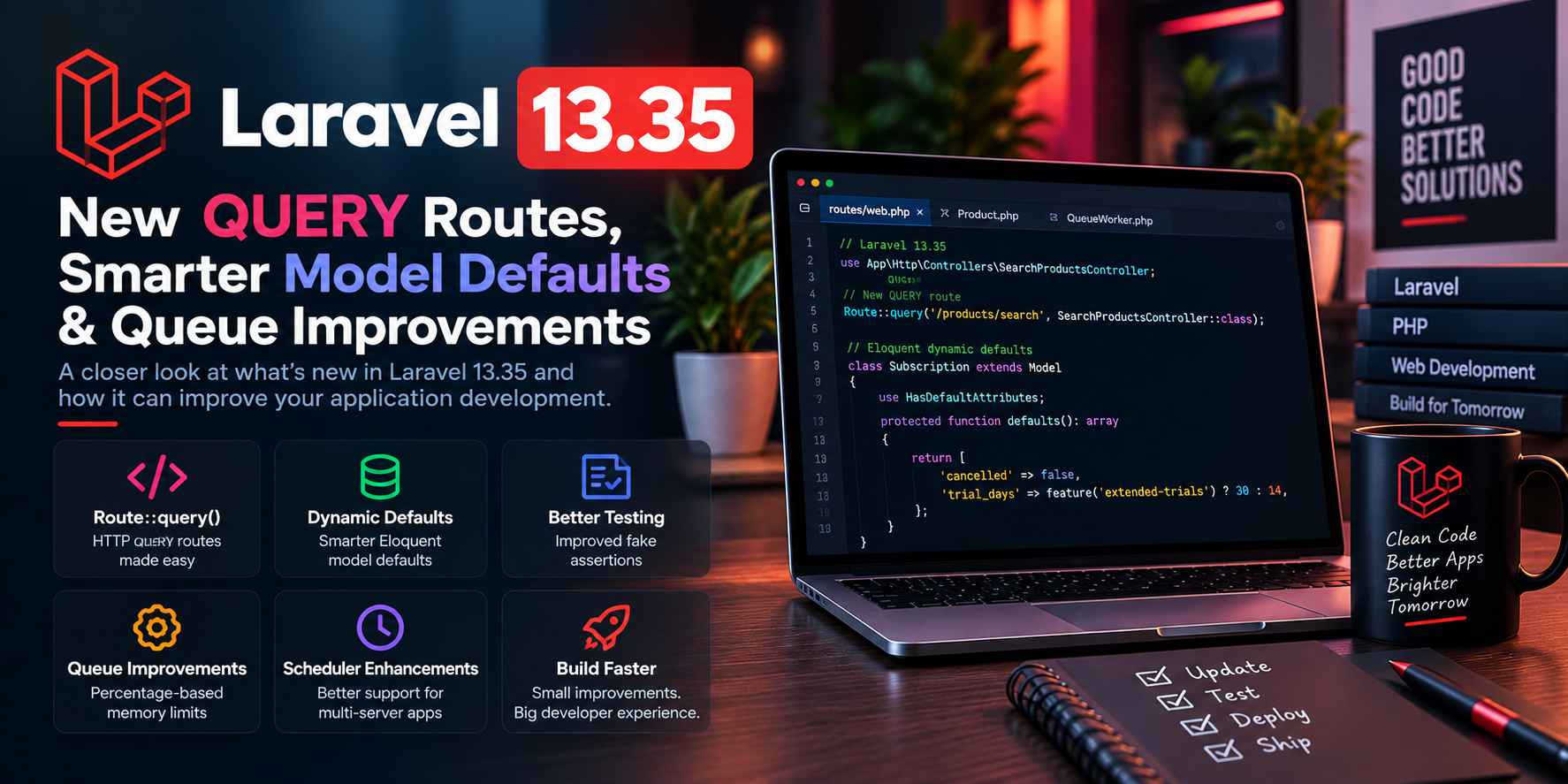
⚙️ Improved Queue Management
Queues are an essential part of many Laravel applications.
They are commonly used for:
- 📧 Sending emails
- 📦 Processing orders
- 🖼️ Image processing
- 📊 Generating reports
- 🔄 Synchronizing external APIs
- 🔎 Updating search indexes
Laravel 13 improves queue routing by allowing jobs to be routed to specific connections and queues.
This is particularly useful for larger applications where different types of background jobs need different processing resources.
For example, you may want payment-related jobs and image-processing jobs to run on separate queues.
That makes queue infrastructure easier to organize and scale. 📈
🛡️ Security Improvements
Security remains an important part of Laravel development.
Laravel 13 includes improvements to request-forgery protection, providing developers with stronger tools for validating incoming requests.
For developers, this is a good reminder that application security should be considered throughout the development process—not only after an application is completed.
Always keep your framework, dependencies, PHP version, and server environment updated. 🔐
🏷️ Expanded PHP Attributes
Laravel 13 makes greater use of modern PHP attributes.
Attributes allow developers to describe application behavior directly in their PHP code.
For example:
#[Middleware('auth')]
class CommentController
{
    #[Middleware('subscribed')]
    public function store()
    {
        //
    }
}
This approach can make certain configurations easier to understand because the behavior is located closer to the code it affects.
Laravel 13 expands attribute support across several areas of the framework. 💡
⚡ Cache Improvements
Caching is critical for high-performance applications.
Laravel 13 introduces improvements that make working with cache expiration more flexible, including the ability to extend the lifetime of an existing cache item.
This can be useful when cached information remains relevant and you want to keep it available without unnecessarily rebuilding the cached data.
Small framework improvements like this can have a big impact on everyday development. 🚀
🐘 PHP Requirements
Laravel 13 requires a modern PHP environment.
Before upgrading, check your current PHP version and make sure your server, local development environment, Composer dependencies, and PHP extensions meet the requirements.
You can check your PHP version with:
php -v
And inspect installed extensions with:
php -m
Keeping PHP and Laravel versions reasonably current also makes future upgrades easier.
🧪 How to Upgrade Safely
Thinking about upgrading an existing Laravel project?
Don't upgrade directly on production. 🚫
A safer process is:
1. 💾 Create a backup
Back up your application and database before making major changes.
2. 📦 Review Composer dependencies
Check your composer.json and installed packages for compatibility.
3. 🧪 Upgrade your development environment
Test the Laravel upgrade locally first.
4. ✅ Run automated tests
Test authentication, database operations, APIs, queues, payments, and other critical functionality.
5. 🔌 Test third-party services
Don't forget external APIs, payment gateways, email providers, storage systems, and other integrations.
6. 🚀 Deploy to staging
Run the upgraded application in an environment that closely matches production.
7. 📊 Monitor the application
After deployment, monitor errors, logs, queues, response times, and other important metrics.
🌱 Should You Use Laravel 13 for a New Project?
For a new project, using the current major Laravel release is worth considering because you start with a modern framework foundation.
Laravel 13 is particularly interesting for applications that could benefit from:
- 🤖 AI features
- 🔎 Intelligent search
- 📡 Modern APIs
- ⚙️ Background processing
- 🛡️ Modern security practices
- ⚡ Improved developer productivity
For an existing production application, however, the best upgrade strategy depends on your current Laravel version and package ecosystem.
🎯 Final Thoughts
Laravel 13 is more than a routine framework update.
The combination of AI capabilities, semantic search, JSON resources, improved queues, security enhancements, PHP attributes, and caching improvements makes it an exciting release for modern PHP developers. 🚀
If you're starting a new application, Laravel 13 provides an excellent foundation to explore modern web development.
If you're upgrading an existing project, take a controlled approach: check dependencies, test thoroughly, use staging, and only then move to production. 🧪
The future of PHP development is becoming more intelligent, API-driven, and developer-friendly—and Laravel is continuing to move in that direction. 💻✨
forum Discussion & Comments 0
rate_review Leave a Comment